

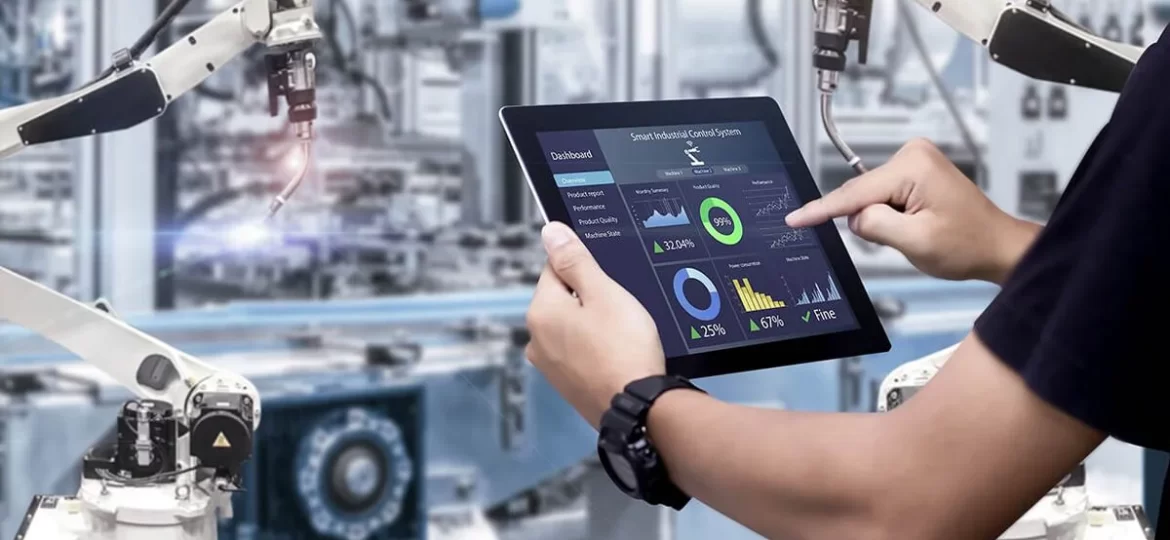
HMI (Human Machine Interface), an important technology that enables communication between man and machine in industrial automation systems, creates a bridge between industrial devices such as production lines, robots and other automation equipment and human operators.
Functions and Benefits of HMI
1. Communication and Control:
The HMI provides the information and controls necessary for the smooth operation of industrial automation systems. Through the HMI, human operators can control any device on the production line and manage factory operations. This enables effective monitoring and control of production processes.
2. Error Detection and Correction:
The HMI helps to quickly detect and correct errors that may occur in automation systems. Recognizing errors at an early stage prevents production stoppages and potential damages.
3. Increased Productivity:
HMI increases the efficiency of industrial automation systems. Thanks to the HMI, human operators can control devices on the production line and ensure that errors are resolved quickly. Furthermore, the flexibility of the HMI makes it easy to adjust and change automation systems, which increases the efficiency of the production line.
4. Security:
HMI enables safer operation of industrial automation systems. Through the HMI, operators can monitor safety systems while controlling devices on the production line, enabling potential hazards to be identified quickly.
Conclusion
The HMI plays a critical role in industrial automation systems because it enables interaction between people and machines. The use of HMI helps factories become smarter and safer, increases efficiency and helps detect and resolve errors.